Sophomore Rankings 2016-2017

by: Greg Uratsu

Here is TWOandTHROUGH’s rank (from top to bottom) of the top sophomores for the 2016-2017 NCAA Basketball Season.  I’m excited to see the impact that these players have on the basketball world and their draft stock before and after their sophomore year!

ncaa_logo

Courtesy of: Wikimedia.org – NCAA Logo

Ivan Rabb (California)

OG Anunoby (Indiana)

Tyler Lydon (Syracuse)

Alonzo Trier (Arizona)

Thomas Bryant (Indiana)

Edmond Sumner (Xavier)

Shake Milton (SMU)

Jessie Govan (Georgetown)

Caleb Swanigan (Purdue)

Chance Comanche (Arizona)

Chimezie Metu (USC)

Dwayne Bacon (Florida St)

Donovan Mitchell (Louisville)

Mikal Bridges (Villanova)

Carlton Bragg (Kansas)

Drew Eubanks (Oregon St)

Bennie Boatwright (USC)

Raymond Spalding (Louisville)

Jawun Evans (Oklahoma St)

DJ Hogg (Texas A&M)

Isaac Humphries (Kentrucky)

Kerwin Roach (Texas)

Deng Adel (Louisville)

Tacko Fall (UCF)

Jalen Adams (Connecticut)

TWOandTHROUGH Bio

By: Greg Uratsu

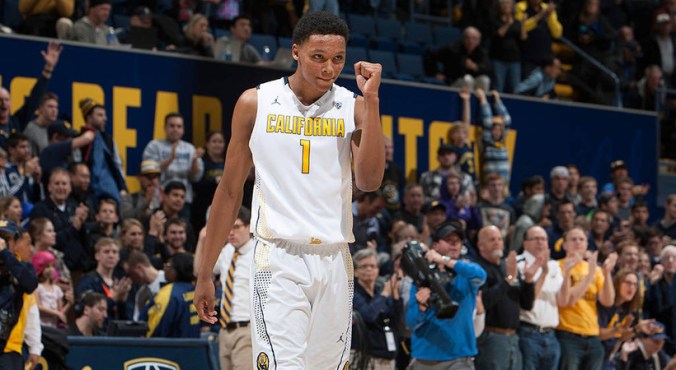
Ivan Rabb (Cal)

College:  University of California, Berkeley

He was the 8th ranked recruit nationally by ESPN

ivan-rabb

Courtesy of: http://pac-12.com – Kevin Danna

Freshman Year:  Fans had huge expectation and excitement for Rabb’s commitment to Cal.  He was a high-school McDonald’s All-American and was expected to be a “one and done” player.  Rabb had a great first season at Cal averaging 12.5 points per game, 8.5 rebounds per game, and registering 12 double-doubles.  Although those numbers were good, they weren’t great – especially with how high of ceiling many recruiting analysts and NBA scouts gave Rabb.  His go-to move is a baby left hook that is soft, almost un-blockable, and consistent.  At 6’ 10, Rabb possesses elite lateral quickness and is very explosive in transition.  As of now, Rabb has relied mainly on being taller and more athletic than most of his competition – he must fill out his frame and increase strength to remain competitive amongst the athletic freaks in the NBA.


Sophomore Year:  Rabb is the perfect “two and through” example.  Although many predicted he’d be a lottery-pick in the 2016 NBA draft after his freshman year, he made the decision to stay at Cal.  Rabb states via Sports Illustrated,“At the end of the day, the NBA isn’t going anywhere,” Rabb says. “If I’m the guy I’m supposed to be, I should be there next year as well. I should be even better, even more comfortable on the floor, have a better mentality. There are some improvements on the floor I want to make, and why not make them in college before I get to the next level? I want to have fewer weaknesses, so when I get there, I can just continue to get better.” During Rabb’s sophomore season, expect him to extend the range of his jumper, improve his ball handling, develop more post moves beyond his baby left hook, and improving at a perimeter defender.


As Rabb states, “People that go to college for [only] one year, very few of them actually do well in the NBA,” Rabb says. “There are definitely guys that go above and beyond expectations and dominate the league in the future or stick around. But there are also plenty of guys who are in and out. Personally, I don’t want to be a guy who is in and out. I don’t believe if I would have left after my first year that that would happen. But at the same time, I want to be more comfortable on the floor. There are plenty of things I can do to help myself before I leave.”


Conclusion:  I can see Rabb improving his draft stock even if he ends up with similar stats during his sophomore year.  Teams who may have been hesitant to draft Rabb in 2016 may develop more confidence in the 2017 NBA draft after seeing him play for two years because they have a more concrete idea of what they’re getting.  Rabb’s goal is to not be the, “guy who is in and out” and his decision to play a second year and forego the 2016 NBA draft will get him closer to that goal.  Even if Rabb is unable to meet his full potential and become a NBA superstar, his second year of collegiate basketball can only strengthen his NBA floor.  Rather than risk a high-draft pick on a potential bust, Rabb’s floor can develop into a fully capable role player off the bench – thus making the high draft pick worth it.  We see plenty of role players in the NBA with long careers (Nick Collison for example).  I’d rather have a productive role player than a bust as my worst case scenario if I am investing a high NBA draft pick.  Ivan Rabb, thank you for being a great example of the benefit(s) of the possible “two and through” era!

TWOandTHROUGH Bio

By: Greg Uratsu

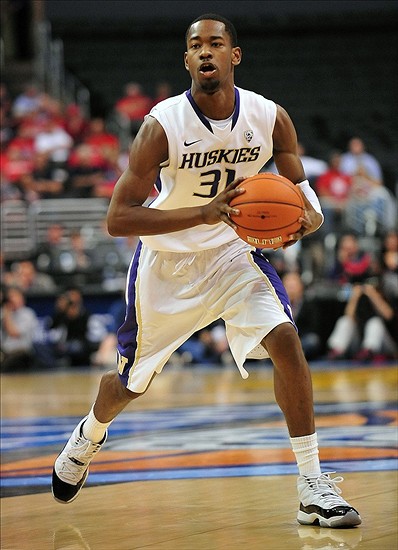
Thursday Bio: Terrence Ross

College:  University of Washington

Ross was the 30th ranked recruit nationally by ESPN

Freshman Year:  Ross came off the bench during his freshman year.  Ross earned honorable mention Pac-10 All-Freshman team honors after averaging 8.0 points, 2.8 rebounds and 1.0 assists in 34 games.  He was named to the Pac-10 All-Tournament team after averaging 15.3 points and 2.7 rebounds per game in the 2011 Pac-10 Tournament.  As impressive as Ross was during his freshman year, there were concerns about his shot selection.  Improved ball handling would help in getting separation from his defender and creating higher-percentage shots.  His 1.7 free-throw attempts per 40 minutes pace can be improved with another year of collegiate basketball.

Sophomore Year:  Ross earned first-team All-Pac-12 honors after averaging 16.4 points, 6.4 rebounds, 1.4 assists and 1.3 steals in 35 games. He helped Washington reach the semi-finals of the 2012 National Invitation Tournament averaging 25.0 points and 5.5 rebounds per game.  His ball handing still needs improvement since he creates space from spin moves and speed that may not be as much of an advantage in the NBA as in the NCAA.  Even so, Ross improved tremendously during his sophomore year – mostly on the defensive side of the ball.  His length, athleticism, and ability to move his feet to stay in front of his man makes him an absolute disruptive force.  In addition, Ross was able to improve his free-throws per game from 1.7 to 2.6 (per 40 minute pace).   By showing growth in his overall game and once again showing off his great athleticism, size, and length that translates well to the NBA game, Ross’ draft stock benefited greatly by answering any concerns about his freshman profile and growth potential.

NBA: Drafted 1st Round, 8th pick by Toronto Raptors

Highlights

  • 2013 Sprite Slam Dunk Champion
  • Scored a career high 51 points on January 25th, 2014 against the Los Angeles Clippers.
  • On November 2nd, 2015, Ross signed a three-year $31.5 million contract extension with the Toronto Raptors.

The jury is still out on Ross as a professional basketball player.  After nearly four seasons, 272 games, and 6,314 minutes played, Terrence Ross remains somewhat of a mystery.  A common phrase I see in many write-ups is he’s a, “maddening up-and-down player”.  When he’s up he gives the Raptors a capable explosive player to go along with Kyle Lowry, Demar DeRozen, and DeMarre Carroll.  When he’s down he loses focus in using his superior athleticism and quickness to cause havoc in the transition game and snuffing out passing lanes on defense.  The Raptors need to put greater emphasis on getting him the ball where he performs best: on the move and in transition.  This is not easy with the Raptors’ iso-heavy, DeRozan-and-Lowry offense.

Overall:  I believe the second year of collegiate basketball helped Ross solidify his draft stock.  By playing a second year he was able to show continued success in his strengths while displaying improvement in his weaknesses and growth in his overall game.  Although some say the Raptors made a reach in drafting Ross 8th, I say that the extra year of NCAA basketball solidified the Raptors’ confidence in what they were getting in Ross – a very athletic, quick, and explosive player with known weaknesses that may or may not fix itself over time.  The strengths that Ross displayed over two years at Washington provided the Raptors with a player who is at the very minimum a valuable role player on a playoff caliber team if his full potential is never reached.  In my opinion I like the idea of Ross’ floor being a valuable role player for years to come rather than drafting a potential outright bust.